
Abbey Mill was the original mill site serving Tintern Abbey in the Wye Valley.
Known also as the “Wye Valley Centre” it is now a complex of shops set around an old mill building in the middle of Tintern.
It utilised the Angidy stream running through the site for power.
Abbey Mill was firstly a corn mill but was probably also a woollen mill for part of its life. Records from the 1820s show the mill reverting to corn but at some point it changed again to become a wood turnery, sawmill and builder’s store until the mid 1970s.
The wood turnery produced rolling pins, candlesticks, skittles and wooden coconut shy balls during the 20th century. Skilled craftsmen also worked oak, alder and sycamore into chair legs and spindles, until WW II forced the turnery to close.
There was a saw mill located on the bottom level processing local timber until the 1970s. Incidentally, there was no emergency stop on the waterwheel which powered the saws, so men working here were in constant danger of cutting off hands or fingers! Inside you can still see the remains of the wheels and belts which drove the saws.
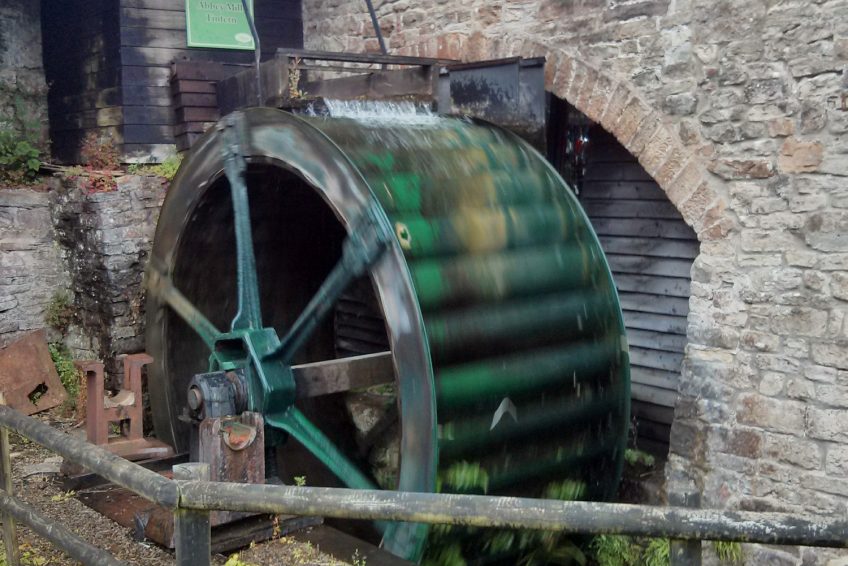
All the power came from a waterwheel, one of 22 waterwheels which lined the banks of the Angidy river in the 1800s, providing energy for the Valley’s industries. The Abbey Mill wheel is the only one to survive.
The Old Water Wheel was made in the 1870s and turned until Thursday 22nd March 1951 – after the Easter Holidays the men returned to work to find that the machines were to be powered by electricity!
The Old Water Wheel and Workings were taken away to be restored in November 2008 and turned again in
April 2009. The restoration was a part of an “Overlooking the Wye” project, part funded by the Heritage Lottery.
The site was previously a tidal port serving the River Wye, but has since been filled in. The old wireworks bridge connecting to the Wye Valley Railway can still be seen from here too. The various remaining buildings house craft shops, a coffee shop, and a licensed restaurant.
Be sure to check out the Tintern Abbey Blast Furnace, the hidden Limekilns and maybe even the Abbey itself too!
Abbey Mill was the original mill site serving Tintern Abbey in the Wye Valley.
Known also as the “Wye Valley Centre” it is now a complex of shops set around an old mill building in the middle of Tintern.
It utilised the Angidy stream running through the site for power.
Abbey Mill was firstly a corn mill but was probably also a woollen mill for part of its life. Records from the 1820s show the mill reverting to corn but at some point it changed again to become a wood turnery, sawmill and builder’s store until the mid 1970s.
The wood turnery produced rolling pins, candlesticks, skittles and wooden coconut shy balls during the 20th century. Skilled craftsmen also worked oak, alder and sycamore into chair legs and spindles, until WW II forced the turnery to close.
There was a saw mill located on the bottom level processing local timber until the 1970s. Incidentally, there was no emergency stop on the waterwheel which powered the saws, so men working here were in constant danger of cutting off hands or fingers! Inside you can still see the remains of the wheels and belts which drove the saws.
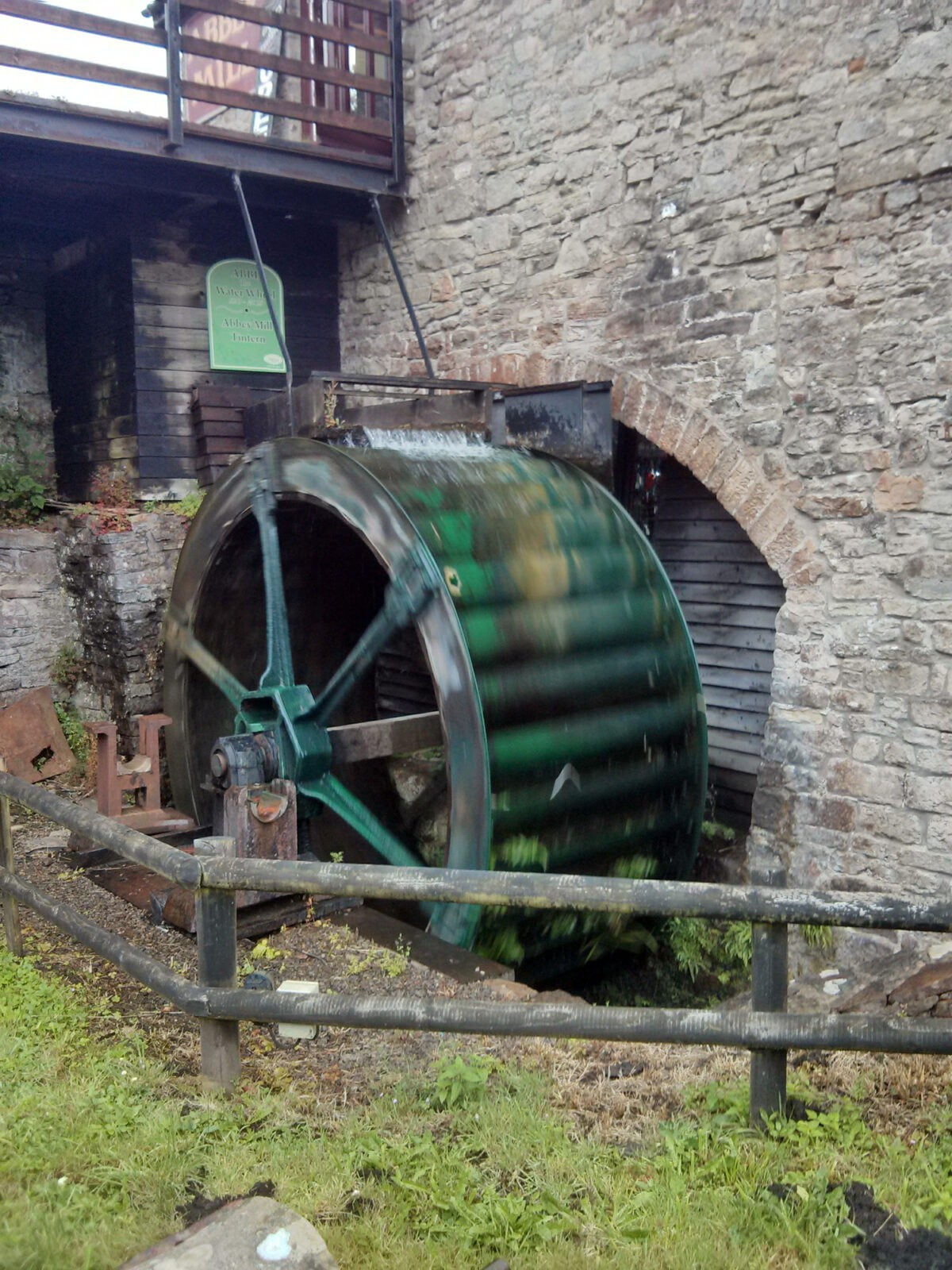
All the power came from a waterwheel, one of 22 waterwheels which lined the banks of the Angidy river in the 1800s, providing energy for the Valley’s industries. The Abbey Mill wheel is the only one to survive.
The Old Water Wheel was made in the 1870s and turned until Thursday 22nd March 1951 – after the Easter Holidays the men returned to work to find that the machines were to be powered by electricity!
The Old Water Wheel and Workings were taken away to be restored in November 2008 and turned again in
April 2009. The restoration was a part of an “Overlooking the Wye” project, part funded by the Heritage Lottery.
The site was previously a tidal port serving the River Wye, but has since been filled in. The old wireworks bridge connecting to the Wye Valley Railway can still be seen from here too. The various remaining buildings house craft shops, a coffee shop, and a licensed restaurant.
Be sure to check out the Tintern Abbey Blast Furnace, the hidden Limekilns and maybe even the Abbey itself too!