
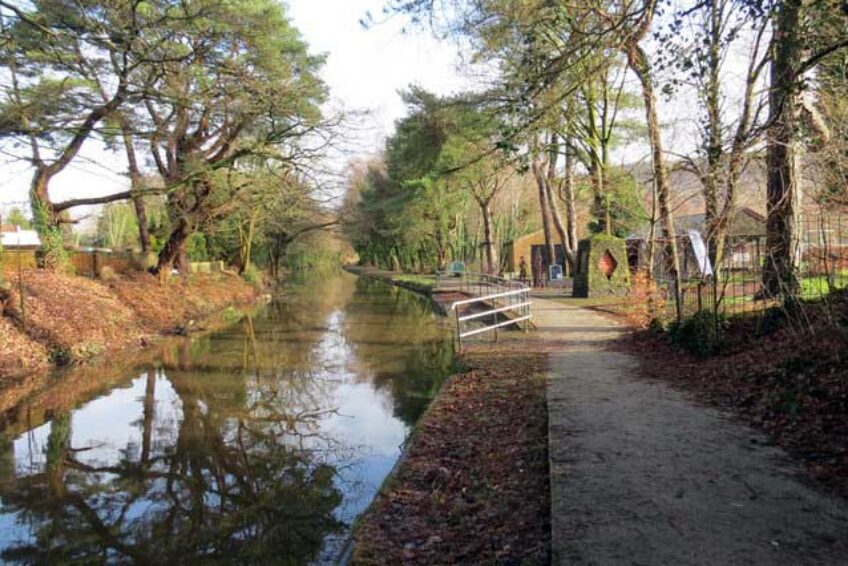
The Swansea Canal is a 220-year-old structure of immense importance to the Lower Swansea Valley.
The Swansea Canal was a 16 mile industrial supply line from Abercraf to the city of Swansea.It was constructed between 1794 and 1798 by the Swansea Canal Navigation Company.
The canal rose 375 feet through 36 locks.
It was built to carry coal down to industries in the Lower Swansea Valley and for export. This new link to the sea enabled development all along the valley of industries and the towns we know today.
Canal boats were built at yards along the route, the last being the “Grace Darling” in 1918 at Godre’r Graig.
With the construction of the Swansea Vale Railway, revenues on the canal declined and 1931 saw its last commercial cargo trip, though horse drawn boats were still used for maintenance and social events until 1958.
Now a days, the remaining 6 miles, in water, are the home to otters and bats; kingfishers, dippers, and ducks; moths, butterflies and beetles!
The Swansea Canal is owned by the Canal and River Trust and the Swansea Canal Society work closely in partnership with them.The Swansea Canal Society was formed in 1981 and is run by volunteers. They became a registered charity in 2004. Check out their website – HERE!
Many of its bridges, aqueducts and locks are listed buildings or scheduled ancient monuments and part of Swansea’s unique heritage.
The canal’s mainly rural setting gives pleasure to walkers, cyclists, joggers, and runners alike.
They have a linear water park that they should be immensely proud of and the Swansea Canal Society aims to improve the amenity for everyone’s benefit.
Swansea, South Wales
The Swansea Canal is a 220-year-old structure of immense importance to the Lower Swansea Valley.
The Swansea Canal was a 16 mile industrial supply line from Abercraf to the city of Swansea.It was constructed between 1794 and 1798 by the Swansea Canal Navigation Company.
The canal rose 375 feet through 36 locks.
It was built to carry coal down to industries in the Lower Swansea Valley and for export. This new link to the sea enabled development all along the valley of industries and the towns we know today.
Canal boats were built at yards along the route, the last being the “Grace Darling” in 1918 at Godre’r Graig.
With the construction of the Swansea Vale Railway, revenues on the canal declined and 1931 saw its last commercial cargo trip, though horse drawn boats were still used for maintenance and social events until 1958.
Now a days, the remaining 6 miles, in water, are the home to otters and bats; kingfishers, dippers, and ducks; moths, butterflies and beetles!
The Swansea Canal is owned by the Canal and River Trust and the Swansea Canal Society work closely in partnership with them.The Swansea Canal Society was formed in 1981 and is run by volunteers. They became a registered charity in 2004. Check out their website – HERE!
Many of its bridges, aqueducts and locks are listed buildings or scheduled ancient monuments and part of Swansea’s unique heritage.
The canal’s mainly rural setting gives pleasure to walkers, cyclists, joggers, and runners alike.
They have a linear water park that they should be immensely proud of and the Swansea Canal Society aims to improve the amenity for everyone’s benefit.
Swansea, South Wales