
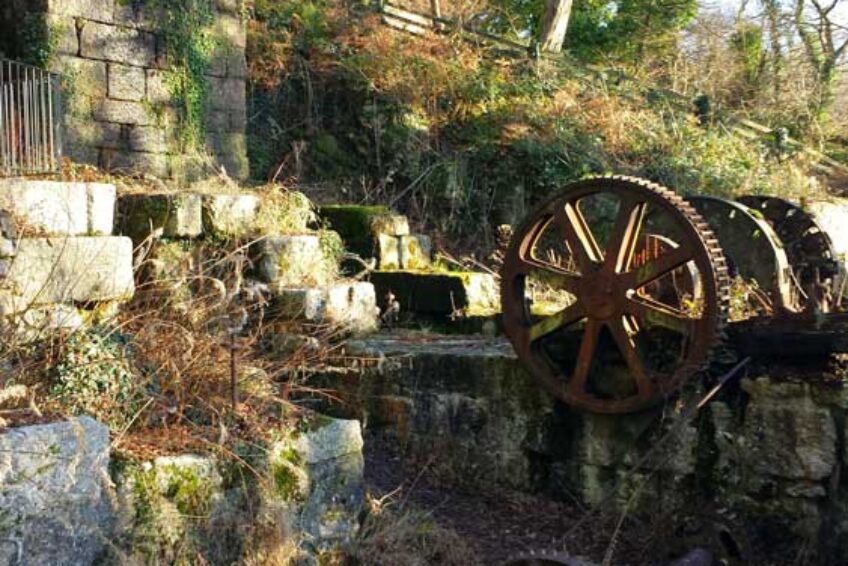
The Carmears Wheel was originally installed in the Luxulyan Valley to work the Carmears Incline.
When the incline fell out of use, the Carmears Wheel was adapted to crush china stone!
The Carmears Wheel was built circa 1840, which was just after the construction of the Carmears incline was started. It originally had a 30 foot overshot waterwheel, which wound a cable on a plinth that raised and lowered the wagons on the incline. This system worked until the 1870s. At the wheel pit site there are also ruins of the checker’s house (he checked the wagons) and the smithy.
The incline was abandoned after the construction of the Cornwall Minerals Railway circa 1872. But the mighty wheel wasn’t wasted. Great effort had gone into building the leat system to turn the wheel with the construction of the massive dual-purpose Treffry Adueduct/Viaduct.
A new 40 foot waterwheel was installed and two grinding pans.
The new waterwheel system was design to grind china stone. They mixed it with even more water and passed it through the spinning granite grinding stones, turned by the central wheel. The milky looking china stone slurry that was generated was piped down to Ponts Mill Clay dries. The pipe ran alongside the Carmears Incline. Production of clay from this system ended in 1910.
Take a look at the interactive map of Luxulyan Valley HERE!
The remains of the Carmears wheel pit are very impressive. There is a convenient gallery so that you can stand at the leat-end and look down on the remains of the grinding pans.
Make a day of it and see all the sites in the valley much more relaxing than a day at the Eden Project!
Luxulyan Valley, Par, Cornwall
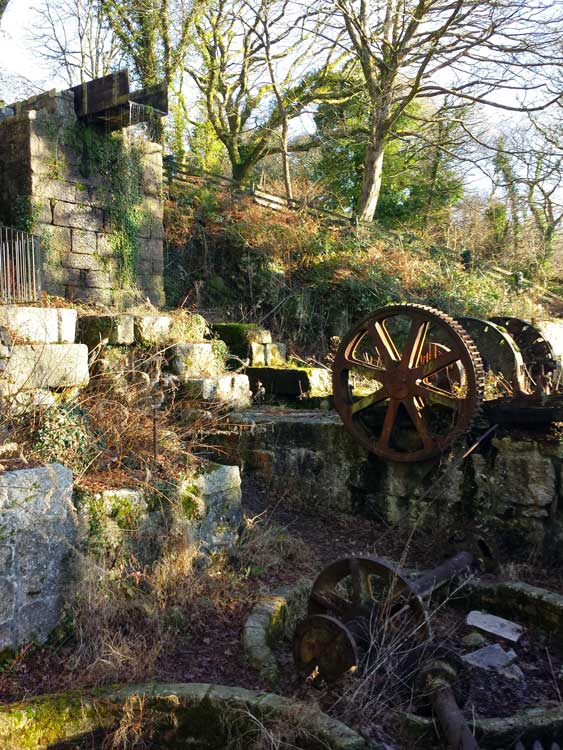
The Carmears Wheel was originally installed in the Luxulyan Valley to work the Carmears Incline.
When the incline fell out of use, the Carmears Wheel was adapted to crush china stone!
The Carmears Wheel was built circa 1840, which was just after the construction of the Carmears incline was started. It originally had a 30 foot overshot waterwheel, which wound a cable on a plinth that raised and lowered the wagons on the incline. This system worked until the 1870s. At the wheel pit site there are also ruins of the checker’s house (he checked the wagons) and the smithy.
The incline was abandoned after the construction of the Cornwall Minerals Railway circa 1872. But the mighty wheel wasn’t wasted. Great effort had gone into building the leat system to turn the wheel with the construction of the massive dual-purpose Treffry Adueduct/Viaduct.
A new 40 foot waterwheel was installed and two grinding pans.
The new waterwheel system was design to grind china stone. They mixed it with even more water and passed it through the spinning granite grinding stones, turned by the central wheel. The milky looking china stone slurry that was generated was piped down to Ponts Mill Clay dries. The pipe ran alongside the Carmears Incline. Production of clay from this system ended in 1910.
Take a look at the interactive map of Luxulyan Valley HERE!
The remains of the Carmears wheel pit are very impressive. There is a convenient gallery so that you can stand at the leat-end and look down on the remains of the grinding pans.
Make a day of it and see all the sites in the valley much more relaxing than a day at the Eden Project!
Luxulyan Valley, Par, Cornwall