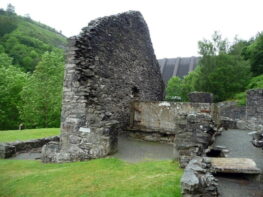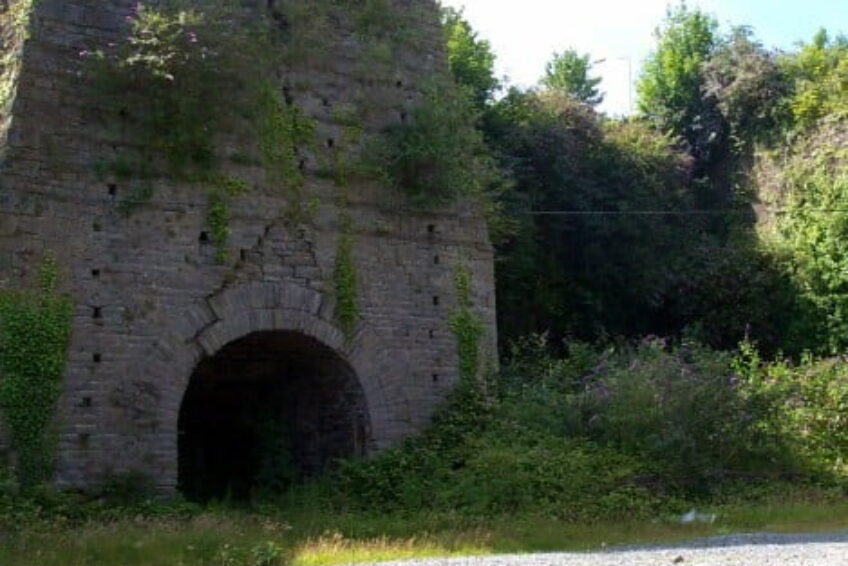
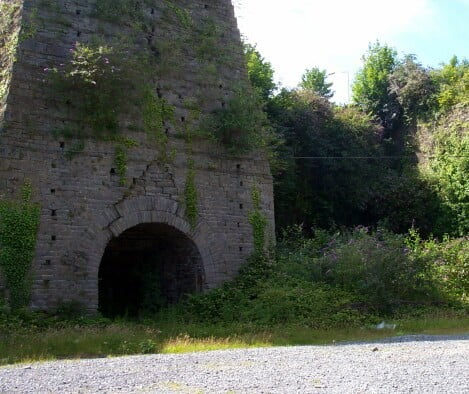
Neath Abbey Ironworks is adorned with 2 of the highest masonry blast furnaces ever constructed!
They were built in 1793 – and stand at just over 51 and 63 ft tall.
The Neath Abbey Ironworks became famous for high-quality engineering products including locomotives, stationary engines and steamships. They were able to take the raw ingredients and products a massive range of high-quality finished products, due to the size of the site and the huge range of expertise employed.
The works were established in the 18th century (circa 1792) by the Foxes of Falmouth (in Cornwall), a famous Quaker family. They were further developed from 1817 by Joseph Tregelles Price, another Quaker.
The mighty furnaces were designed by Peter Price, who had worked with furnaces in Great Britain and America. They sat either side of a Boulton and Watt blowing engine (long since gone), which provided the blast to keep up the smelting temperature.
At the time, the steam-driven, double blowing engine was thought to be the most powerful of its type.
The works finally closed circa 1885.
There are several notable surviving structures including;
- 2 superb, grade II* listed blast furnaces dating from circa 1793,
- Ty Mawr, the ironmaster’s house of 1801, and
- the engine manufactory.
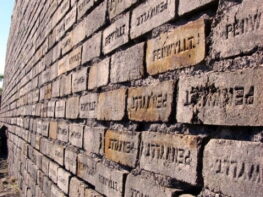
There is now no entrance to the ironworks from the main road, although you can look through the gates of the builder’s yard and see the engine manufactory and the great furnaces. The charging platform for one of the iron furnaces can be seen on the right, if you turn right up Longford Road. Just after the railway viaduct, a path goes down to your right towards the old tramroad bridge across the Clydach. The parapet of the bridge is made from carved blocks of copper slag, which probably came from the works in the abbey. Under the bridge is a weir, which would have held water back to power the ironworks.
The most impressive part of the ruins are the late 18th-century furnaces, 2 of the highest masonry blast furnaces ever constructed.
The casting houses, which would have stood in front of the furnaces, have gone but you can still see the line of the railway, which would have taken materials to the charging houses at the top of the furnaces.
Behind the ironmaster’s house, the roofless building to the right of the entrance, is the shell of the engine manufactory. A wing of this building extended towards the Clydach river and a waterwheel, powered by a leat from higher up the stream, drove a series of machines. Much of the machinery for the works was made on site. There were 2 cylinder-boring workshops on the ground floor of this building, a fitting shop and smithy. Upstairs was the pattern-maker’s workshop.
Opposite the furnaces, and almost completely overgrown, are the ruins of the forge with its waterwheel housing. Here, there was a wrought iron bar and tinplating mill.
Higher up the Clydach Valley is a former water-powered forge with an iron roof, cast at the works in 1825. The building was later used as a woollen mill and the machinery was removed to the former Swansea Maritime and Industrial Museum. Further upstream, the river was dammed to ensure a reserve of water and a strong steady flow to the ironworks. The present large masonry dam, which carries a public road, dates from about 1840.
Neath Abbey Ironworks is an incredible site, littered with delicious industrial archaeology. However, it is rarely open to the public.
Open days have known to be run by Cadw Wales, but are very rare. The site is generally cared for by the Friends of Neath Abbey Iron Company and the Dyffryn Clydach Volunteers.
Nearby listed industrial buildings include:
- II* No. 2 Blast Furnace at former Neath Abbey Ironworks
On the W side of the River Clydach in Neath Abbey some 140m N of the junction of Neath Abbey Road. - II Neath Abbey Railway Viaduct (partly in Blaenhonddan community)
Crossing the River Clydach and Taillwynd Road some 220m N of Neath Abbey Road. - II Neath Abbey Railway Viaduct (partly in Dyffryn Clydach community)
Crossing the River Clydach and Taillwynd Road some 120m N of Neath Abbey Road. - II Former engine manufacturing building at former Neath Abbey Ironworks
On the W side of the River Clydach in Neath Abbey some 50m N of the junction of Neath Abbey Road. - II Forge tramroad bridge at Neath Abbey Ironworks (partly in Blaenhonddan community)
Crossing the River Clydach some 125m N of the Neath Abbey railway viaduct. - II Forge tramroad bridge at Neath Abbey Ironworks (partly in Dyffryn Clydach community)
Crossing the River Clydach some 125m N of the Neath Abbey railway viaduct. - II The Smiths Arms
On the S side of Neath Abbey Road just W of its junction with Taillwyd Road. - II Former forge and rolling mill at Neath Abbey Ironworks
On the E side of the River Clydach some 220m N of the Neath Abbey railway viaduct.
Neath Abbey Ironworks, Neath, Glamorgan
Grid Reference: SS 7380 9773
Neath Abbey Ironworks is adorned with 2 of the highest masonry blast furnaces ever constructed!
They were built in 1793 – and stand at just over 51 and 63 ft tall.
The Neath Abbey Ironworks became famous for high-quality engineering products including locomotives, stationary engines and steamships. They were able to take the raw ingredients and products a massive range of high-quality finished products, due to the size of the site and the huge range of expertise employed.
The works were established in the 18th century (circa 1792) by the Foxes of Falmouth (in Cornwall), a famous Quaker family. They were further developed from 1817 by Joseph Tregelles Price, another Quaker.
The mighty furnaces were designed by Peter Price, who had worked with furnaces in Great Britain and America. They sat either side of a Boulton and Watt blowing engine (long since gone), which provided the blast to keep up the smelting temperature.
At the time, the steam-driven, double blowing engine was thought to be the most powerful of its type.
The works finally closed circa 1885.
There are several notable surviving structures including;
- 2 superb, grade II* listed blast furnaces dating from circa 1793,
- Ty Mawr, the ironmaster’s house of 1801, and
- the engine manufactory.
There is now no entrance to the ironworks from the main road, although you can look through the gates of the builder’s yard and see the engine manufactory and the great furnaces. The charging platform for one of the iron furnaces can be seen on the right, if you turn right up Longford Road. Just after the railway viaduct, a path goes down to your right towards the old tramroad bridge across the Clydach. The parapet of the bridge is made from carved blocks of copper slag, which probably came from the works in the abbey. Under the bridge is a weir, which would have held water back to power the ironworks.
The most impressive part of the ruins are the late 18th-century furnaces, 2 of the highest masonry blast furnaces ever constructed.
The casting houses, which would have stood in front of the furnaces, have gone but you can still see the line of the railway, which would have taken materials to the charging houses at the top of the furnaces.
Behind the ironmaster’s house, the roofless building to the right of the entrance, is the shell of the engine manufactory. A wing of this building extended towards the Clydach river and a waterwheel, powered by a leat from higher up the stream, drove a series of machines. Much of the machinery for the works was made on site. There were 2 cylinder-boring workshops on the ground floor of this building, a fitting shop and smithy. Upstairs was the pattern-maker’s workshop.
Opposite the furnaces, and almost completely overgrown, are the ruins of the forge with its waterwheel housing. Here, there was a wrought iron bar and tinplating mill.
Higher up the Clydach Valley is a former water-powered forge with an iron roof, cast at the works in 1825. The building was later used as a woollen mill and the machinery was removed to the former Swansea Maritime and Industrial Museum. Further upstream, the river was dammed to ensure a reserve of water and a strong steady flow to the ironworks. The present large masonry dam, which carries a public road, dates from about 1840.
Neath Abbey Ironworks is an incredible site, littered with delicious industrial archaeology. However, it is rarely open to the public.
Open days have known to be run by Cadw Wales, but are very rare. The site is generally cared for by the Friends of Neath Abbey Iron Company and the Dyffryn Clydach Volunteers.
Nearby listed industrial buildings include:
- II* No. 2 Blast Furnace at former Neath Abbey Ironworks
On the W side of the River Clydach in Neath Abbey some 140m N of the junction of Neath Abbey Road. - II Neath Abbey Railway Viaduct (partly in Blaenhonddan community)
Crossing the River Clydach and Taillwynd Road some 220m N of Neath Abbey Road. - II Neath Abbey Railway Viaduct (partly in Dyffryn Clydach community)
Crossing the River Clydach and Taillwynd Road some 120m N of Neath Abbey Road. - II Former engine manufacturing building at former Neath Abbey Ironworks
On the W side of the River Clydach in Neath Abbey some 50m N of the junction of Neath Abbey Road. - II Forge tramroad bridge at Neath Abbey Ironworks (partly in Blaenhonddan community)
Crossing the River Clydach some 125m N of the Neath Abbey railway viaduct. - II Forge tramroad bridge at Neath Abbey Ironworks (partly in Dyffryn Clydach community)
Crossing the River Clydach some 125m N of the Neath Abbey railway viaduct. - II The Smiths Arms
On the S side of Neath Abbey Road just W of its junction with Taillwyd Road. - II Former forge and rolling mill at Neath Abbey Ironworks
On the E side of the River Clydach some 220m N of the Neath Abbey railway viaduct.
Neath Abbey Ironworks, Neath, Glamorgan
Grid Reference: SS 7380 9773