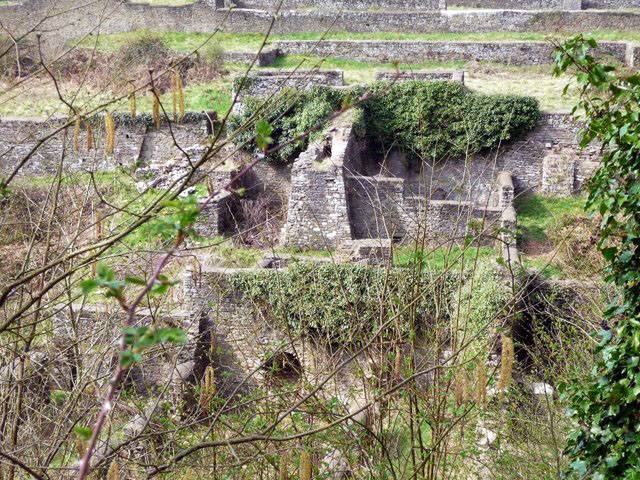
During the 12th, 13th and 14th centuries the Forest of Dean was the most important iron-producing district in this country.The Blast Furnace was found in Sussex from the year 1500 and found in Glamorgan and Monmouthshire in the 16th century, but not until the beginning of the 17th century did it make its appearance in the Forest of Dean.In 1611 (June I4th) an agreement was made Giles Bridges and others,
“whereby they were given Iiberty to erect all manner of works,iron or other, by land or water, excepting wyer (wire) works and the same to pull down, remove and alter at pleasure," also " Iiberty to take myne oare and synders either to be used for all the workes or otherwise. . and the like for sea cole and marle."This agreement was for 10 years, but within a few months it was superseded by the grant made to the Earl of Pembroke, and there is nothing to show that Giles Bridges had set to work in the meantime. The Earl of Pembroke was a man of great power and influence, and he was considerably interested in the Forest of Dean.By 1615 the Earl gave up his grant and the works he had built were leased to Sir Basil Brooke.The noted Scottish metallurgist, David Mushet, moved to the Forest of Dean in February 1810 to take up full-time management of Whitecliff Ironworks in Coleford . He was responsible for Mushet Process and successfully improved Bessemer’s process later in the century.In 1818 he moved on to build his experimental site at Darkhill and ran with hisnew alloy - Titanium.